Work / Case study

Abstraction Creative

Building our own practice

Brand strategy · Website design & development · Our Ongoing Partnership

Our website has two jobs. It helps someone decide whether AC is the right creative partner, and it gives our team a way to follow that relationship from the first question onward. We designed the site, built the enquiry workflow and are using our own business to test the approach we offer clients.

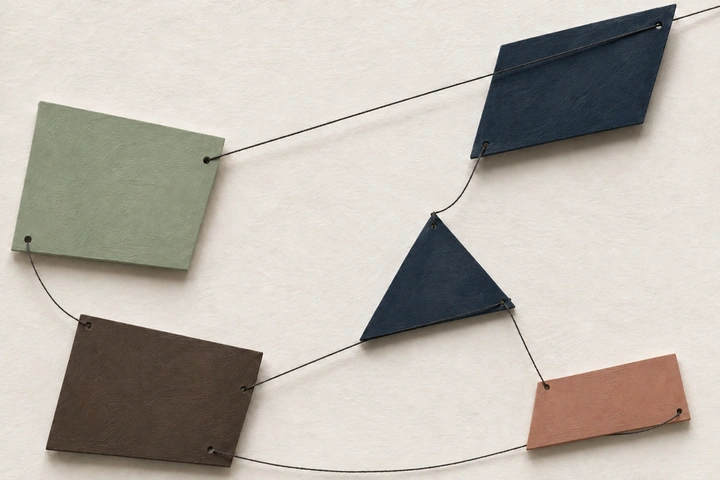
AC’s gold homepage introduction and the A Shared Form artwork.
The homepage at launch, November 2026Design and development by Abstraction Creative

Helping the right people find AC

Our work spans brands, digital experiences and physical spaces. A prospective client might arrive with a specific project in mind or with a business problem they are still trying to define. We wanted both people to be able to find relevant work, see how we think and reach someone who could help.

Organic search is our first focus. The business question is whether people who discover AC there go on to start conversations about work we can do well. Answering it takes the website, the team handling enquiries and a record of what happens next.

Designing for the person considering AC

We redesigned the site to help someone decide whether to bring us a project. Three questions shaped the interface. Where should I start? Has AC solved a problem like mine? And if the work feels relevant, how do I talk to the people who did it?

A clear way into the site

The homepage opens with the range of our work and one invitation, “Explore our work.” Someone who wants to see what we’ve done can start there. Someone planning a campaign can choose Marketing from the Services menu. On the practice page, the large heading tells them where they’ve landed, and the links directly below it let them explore related services without going back to the homepage.

The Marketing hero identifies the current practice above links to the other services.
The Marketing hero and practice navigation

Different blocks for different decisions

Someone considering AC might want to see how we tackled a brief, get a feel for our creative point of view or look up a subject that matters to their business. We designed different ways into Work, Gallery and Index around those decisions.

Project block

On our Work page, each project opens with what we set out to do and the disciplines involved. Here, the brief was our own. A prospective client can see why we built the site, then follow the link to the tools we chose to run it.

On the homepage, we paired our artwork A Fragment Becomes a World with an invitation to the Gallery. A prospective client can see what catches our eye and explore the thinking behind a piece before we ever meet.

Index cards

We built the Index for visitors who arrive with a specific question. Information Architecture explains how we organize a site so people can find their way. Measurement Strategy explains how we decide what to track once it’s live. Each card opens the relevant entry.

A conversation that starts in context

At the end of this case study, “Start a project conversation” opens a form that asks, “Where would ongoing support help?” Someone interested in working with us can tell us what they’d like to improve while the case is still in front of them. Our standalone Contact page opens with a broader question, “What would you like to talk through?”

AC’s enquiry form asks where ongoing support would help, with space to describe what the business wants to improve.
AC’s Ongoing Partnership enquiry
The navy Contact header reads “Start a conversation.” Below, the form asks what the visitor would like to talk through.
The standalone Contact page

Choosing tools around the client journey

Figma let us review the layouts and the enquiry interaction before we built them in Astro. Keeping those elements reusable means that when we improve the way a case introduces a project or invites a response, we can carry the change across the site. We check it on a working preview before it goes live.

The site launched on November 14, 2026. Our next question is whether the people who find our work bring us projects we’re suited to. Search Console shows which searches surface our pages. Consented site activity helps us decide where to look more closely. The original enquiry in Attio gives the person replying the context to judge fit. Each tells us something different about the same business goal.

Technology stack

What the tools
help us do.

These are the platforms we chose to publish our work, understand how people find it and follow through when someone gets in touch.

Design & build

Figma Astro
How
We review layouts and interactions in Figma, then build the agreed designs in Astro.
Why
We can work through a design decision together before it becomes code and reuse the finished components as the site grows.

ChatGPT helps us explore ideas and edit copy. Codex helps implement and check changes. AC’s team reviews the work.

Review & release

GitHub Cloudflare Pages
How
We track changes in GitHub and review a working version on Cloudflare Pages before release.
Why
We can compare a proposed change with the live site and keep a record of exactly what went live.

UptimeRobot alerts us if the site stops responding. We test the enquiry form separately.

Search & site activity

Google Search Console Google Analytics 4
How
Search Console shows the searches that surface our pages. GA4 records site activity when visitors consent.
Why
Search and page activity help us choose where to investigate. A conversation with the prospect tells us whether there’s a fit.

Bing Webmaster Tools adds a view of Bing search. Google Tag Manager manages the site’s measurement tags.

Behaviour & consent

Microsoft Clarity CookieYes
How
CookieYes manages visitor consent choices. In Clarity we can review heatmaps and session recordings with the enquiry fields masked.
Why
If people repeatedly click the same element, we have a specific interaction to test. Their private enquiry details stay out of the recording.

Enquiries & follow-up

Make Attio
How
Make sends the original enquiry to the contact’s record in Attio, our CRM.
Why
The person replying can see what prompted the conversation. If a message is missing, we can trace its path.

Formspree accepts the website submission. A Gmail filter forwards the notification to Make.


Monthly partnership review

Google Workspace AgencyAnalytics
How
We keep decisions and follow-up actions in Google Sheets. We’re testing an AgencyAnalytics report using AC’s GA4 data.
Why
During the trial we’ll compare the report with the workbook to see whether it saves preparation time or helps us choose a change.

For a client, we start with the business, the people doing the work and the systems they already use. Running these tools ourselves gives us a basis for that conversation.

A working example

From enquiry
to follow-up.

When a visitor asks about working together, their original question needs to reach the person who can answer it. We tested the route at launch.

  1. Formspree

    Receive the request

    The form accepts the enquiry and sends the visitor’s message to our contact inbox.

  2. Gmail

    Route the notification

    A filter forwards the form notification to Make so the team can keep using its regular inbox.

  3. Make

    Connect the records

    The workflow uses the enquiry details to create or update the contact in Attio and attach the original message.

  4. Attio

    Follow up

    The person replying can read the enquiry note, record what the prospect needs and agree on the next step.

Setting a baseline we can improve on

Following an enquiry into Attio tells us whether the handoff worked. Our next question is whether the site is bringing us the kinds of projects we want. We’ll establish a baseline for a defined period. We’ll record how people find AC, which pages they engage with, how many genuine enquiries reach us and which conversations become opportunities.

With your team, we’d choose a starting point that fits your business. If a consultation is the next step for your customers, we could track how many people request one, how many appointments take place and what your team learns in those conversations.

Daily
Check that a customer can take the next step. If an accepted enquiry hasn’t reached the person who should reply, trace it and recover the message.
Weekly
Look for patterns in search, page activity and the questions people ask. A question that keeps coming up might point to something a page needs to explain.
Monthly
Bring the evidence and the team’s experience together. Choose a change worth testing, agree who will make it and decide what would tell us it helped.
Annually
Compare like periods with the baseline. Look at which opportunities became lasting client relationships and use what we learned to set priorities for the year ahead.

What we’ll bring to the first monthly review

Our first review will bring together what people searched for, the pages they reached and the questions they brought to AC. A principal will review those observations alongside the team’s experience, recommend a next step and record who owns it and when we’ll look again.

Our decisions and follow-up actions live in Google Workspace. We’re trying AgencyAnalytics with AC’s own GA4 data to see whether it makes the review easier to prepare or helps a principal spot something worth acting on.

What we intend to publish

Once we have enough comparable activity to answer a business question, we’ll publish the periods and sources, what we changed and what happened afterward. We’ll include changes that made little difference and questions we’re still working through.

Last reviewed

AC’s scope

Brand strategy and visual identity, content and information architecture, interface design, website development and release, search and consent-based measurement, enquiry routing and the design of our monthly partnership review.

What would progress look like for your business?

At AC, we want the site to start conversations with the right clients. That gives us a reason to keep asking what’s working and what to change. We offer that same attention through Our Ongoing Partnership, a monthly subscription for new and existing clients. If we’re meeting for the first time, we start with the customers you want to reach. If we’ve already built something together, we start with what your customers and team have learned since launch. Each month, we bring you a recommendation, agree on the next step together and return to see what happened.

Start a project conversation

Start a conversation.

Tell us what you’re working toward and where you could use help. We’ll reply by email.

Tell us a little about yourself or your organization, what you’re trying to accomplish and what’s getting in the way.