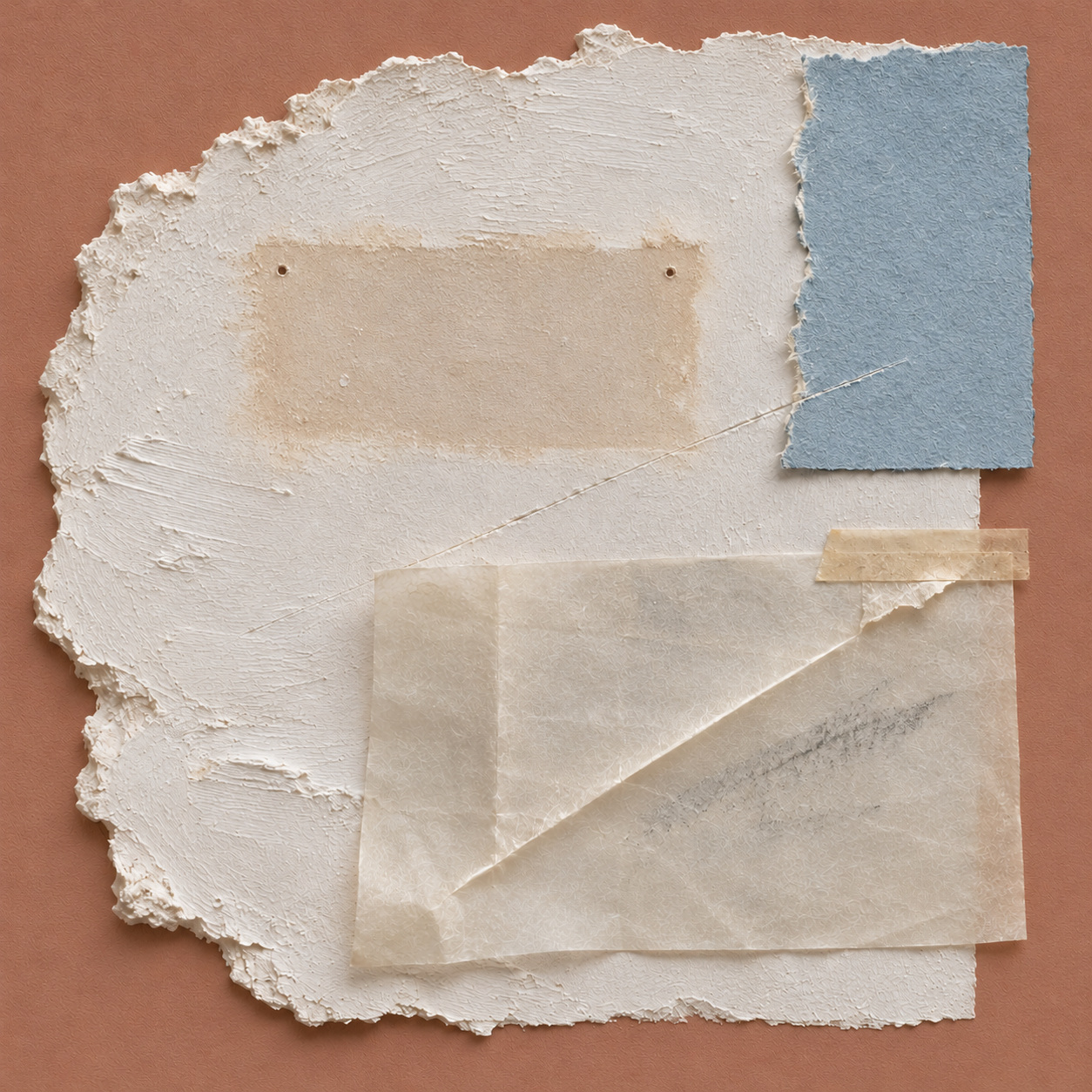
People often encounter the signs of an experience before they encounter the experience itself. A photograph, a demonstration, a review or a record of use can give them something to consider. Each offers a particular view, with its own limits and context.
What Makes It Real? begins with traces. A crease suggests a fold; an empty outline suggests a former presence. We may recognise an action while remaining uncertain about who made it or why. The work gives that uncertainty room, inviting attention to the relationship between what is visible and what we infer.
For AC, this opens a marketing inquiry into the evidence behind a promise. What can someone examine, try or verify? How does the experience of a product or service support what has been said about it? What happens when new information changes their understanding?
Give a claim something to be examined
A promise becomes more useful when someone can understand what it would mean in their own circumstances. A demonstration can show how something works under stated conditions. A description can explain what a service includes and where further judgment is needed. A photograph can reveal a detail while leaving other questions unanswered.
The choice of evidence matters alongside its presentation. What does this example actually support? What would a person need to know to interpret it fairly? Can they ask about the part that matters to them? These questions help a team decide what to show and how much confidence a particular example warrants.
Follow the promise through the service
Consider a repair business describing its approach to unfamiliar problems. A reassuring message introduces an expectation; the assessment gives the customer a first opportunity to understand how the business responds. A clear account of what has been observed, what remains uncertain and which options are available makes that response easier to examine.
Before authorizing work, a customer may need to see the affected part, understand a tradeoff or ask what would change the estimate. The business can decide how to make those conversations possible and what information its team needs to provide them consistently. Its website, estimate and updates can then support the same understanding at different moments.
Let experience revise the account
Listening after an encounter can reveal a difference between what a message suggested and what happened. A repeated question may point to missing information. A customer’s account may expose an assumption that felt obvious within the team. The response could involve changing the language, showing better evidence or reconsidering the service itself.
Carey’s account of symbolic reality provides the conceptual starting point. This study extends it toward the ways people interpret traces, form beliefs and revise them through further experience. That application is AC’s inquiry. The artwork’s physical-looking materials are an artistic proposition about evidence, created digitally.
Return to the Gallery
Encounter What Makes It Real? in the Gallery