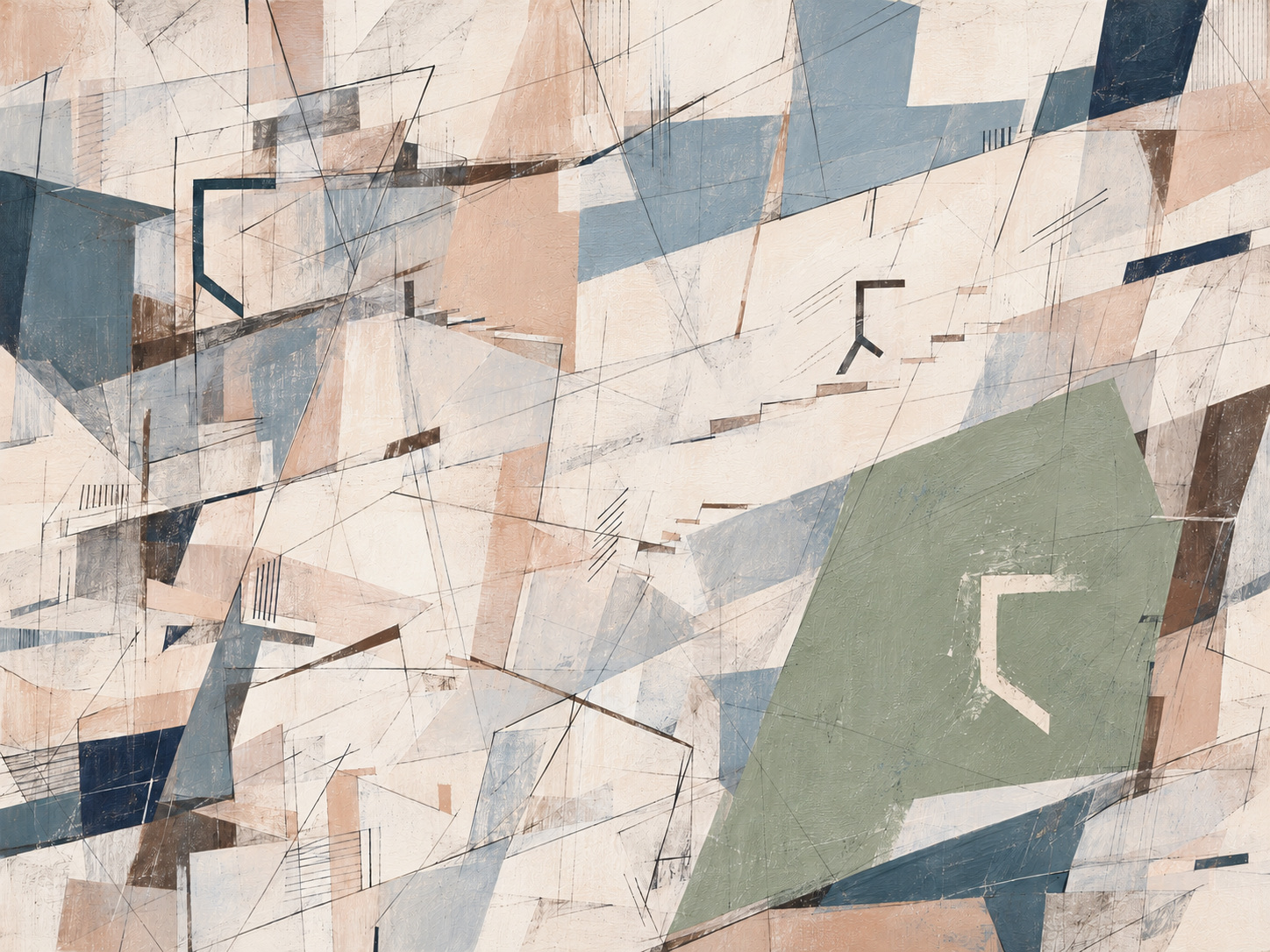
A person encounters a campaign with a history. Its language may recall an earlier experience. An image may feel familiar, distant, reassuring or difficult to place. Understanding develops through what the message offers and what that person brings to it.
Between Seeing and Knowing gives this relationship a visual form. A recurring mark changes its apparent role through its surroundings. Looking again can alter what we notice, what we connect and what we think the whole image means.
Beginning with people
Research helps a team understand the experiences, needs and expectations around an encounter. Those findings give creative work a direction. They also leave questions that only further contact can answer.
A persona can organise what a team knows about an audience. An individual response can reveal where that picture needs to grow. Someone may recognise a promise yet understand its value differently, or need information that the team assumed was already clear.
For AC, this makes listening part of the work throughout a project. The people a campaign hopes to reach can help reveal what matters, what remains uncertain and what deserves closer attention.
A message in context
Consider the journey from an invitation to its destination. A phrase that feels clear beside one image may become uncertain on a landing page with different priorities. A person arriving through a recommendation may bring expectations that differ from someone encountering a brand for the first time.
For a landscape practice, an invitation showing a finished garden might lead to a page offering an initial consultation. We would examine what the image and phrase encourage someone to expect. The page can explain what the consultation includes, what the client should bring and how it relates to a larger commission. A prospective visitor's reading can help the team see where more context is needed.
Language, imagery, placement and sequence contribute to the meaning of that encounter. So do the situation and the amount of context someone has. A useful review considers the path between these moments and asks what each step helps a person understand or do.
This is where marketing connects with digital design and development. The invitation, the page and the interaction need to make sense together, while allowing for different ways in.
Listening to what returns
Creative review becomes more useful when it gives people room to describe their own reading. What did they notice first? What did they expect to happen? Which detail changed their understanding?
Different answers can expose an assumption, suggest a stronger expression or show that a message has more than one useful interpretation. A surprising response deserves curiosity before it becomes a problem to eliminate.
Teams still need to make decisions. Listening gives those decisions more to work with. It can broaden the team's perspective and give participants space to develop their own understanding through the exchange.
From attention to experience
A striking image can begin an encounter. The experience that follows gives someone more evidence with which to interpret it. A clear explanation, an accessible next step or a thoughtful response may strengthen the initial impression. Confusion can change it.
Marketing decisions therefore reach beyond the campaign itself. A promise about ease is encountered in a form, a booking process or a conversation. The people responsible for those moments have something to contribute to the creative discussion.
Following the experience across these connections helps a team recognise where expectations are supported and where they need to be reconsidered. Understanding continues to develop after the first impression.
Reading the work again
The recurring marks in Between Seeing and Knowing invite comparison without settling every association. Their surroundings change what becomes prominent and what seems possible. The viewer brings each earlier encounter to the next.
That offers a question for creative practice: how do we keep learning from the relationship between what we intend and what people understand? Research, making and attentive review can each reveal a different part of it.
References
John Berger, Ways of Seeing (first published 1972). Conceptual reference for the relationship between seeing and understanding. Publisher's book page.
Julie Mehretu, Stadia II (2004), ink and acrylic on canvas, Carnegie Museum of Art. Artistic reference for layering and shifts in scale. Museum record and Whitney audio guide.
The artwork and marketing interpretation are original AC explorations. The image was created with AI image generation. The references are credited as inspiration.
Return to the Gallery
Encounter Between Seeing and Knowing in the Gallery