People bring habits, intentions and unexpected uses to the things we make. A website takes shape again through the people publishing into it. A room changes through the ways people occupy it. A brand acquires associations through experience. Designing with that participation in mind gives us more to work with as an idea becomes part of everyday life.
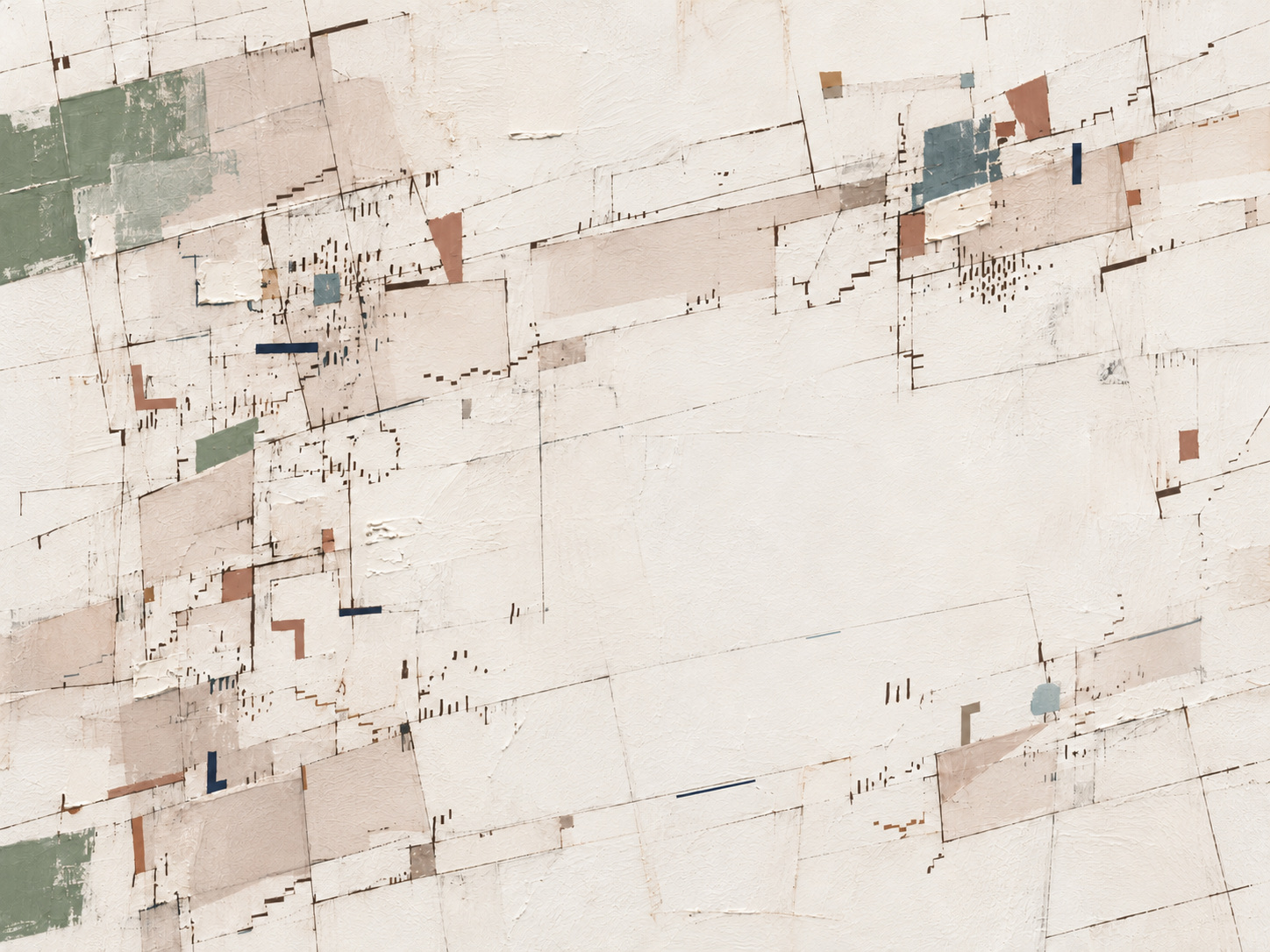
The Life Around the Plan gives this inquiry a visual starting point. Its framework is legible, yet our attention keeps returning to the small events around it: marks collecting, routes crossing, open areas waiting to be read. Structure and activity contribute to the image together.
For AC, the connection extends across Architectural Design, Branding, Digital Design, Digital Development and Marketing. Each involves making something that other people will encounter, interpret, use and sometimes change.
Notice what people bring
A plan can describe an intended route through an experience. Particular encounters help us understand what that route asks of someone.
A person arriving at a website may already know exactly what they need. Another may be trying to decide whether the offering is relevant at all. A place might feel easy to navigate when it is quiet and quite different when people gather, light changes or several activities happen at once.
Research, observation and prototypes can bring these circumstances into the work. An unexpected response gives us something specific to investigate. It may reveal an unclear instruction, an unmet need or a possibility we had not considered.
The same attention belongs within a project team. Differences of opinion can carry useful knowledge about the people and conditions involved. Listening gives us a chance to broaden our understanding and gives others room to develop theirs.
Build for the people who will carry the work forward
Consider a website that several people will update after launch. The design may show a clear relationship between a title, an image and a short description. Everyday publishing introduces more variation: a longer title, missing photography, an urgent update or a contributor who needs help finding the right place for something.
Digital Design and Digital Development can work through those situations together. Content structure, previews, permissions, validation and useful defaults all affect how comfortably people can publish. An integration may remove duplicate work; a clear editing experience may help someone make a better decision.
The questions continue after release. What is easy to maintain? Where do people repeatedly work around the system? What has become possible that was difficult before? Those experiences can help guide the next change.
Understand how meaning develops
Branding gives an organization ways to express its character and purpose. People also form an understanding through an answer to a question, the ease of completing a task and the experience that follows a promise.
Marketing participates in that sequence. An invitation raises expectations. Its destination, the response someone receives and the service that follows help determine what the invitation comes to mean.
Listening across those encounters can reveal where the experience is coherent and where a relationship needs attention. A recurring customer question may suggest clearer language. A promise that is difficult to fulfill may require a change in the offering or its delivery. The useful adjustment may extend beyond the place where the issue first becomes visible.
Give change somewhere to go
In architectural work, an arrangement meets changing patterns of occupation. People find places to pause, gather, work or withdraw. Furniture, materials, light, shade and circulation participate in those choices. Observing how a place is used can help us understand what supports its life and what might be reconsidered.
Digital systems and brand expressions encounter change too. A content model may need to accommodate another kind of story. A service may develop a new audience. A team may discover a more useful way to organize its work.
Thinking about adaptation includes practical judgment: which parts need consistency, where variation helps, and who can make a change with confidence. Keeping the reasoning behind important decisions gives future work a useful starting point.
Keep the conversation open
The artwork offers no single account of what its marks are doing. Looking longer can change what we notice and how we understand the arrangement. It leaves room for a reader’s own experience.
That openness carries into this inquiry. What have people made possible through something you helped create? Where have their choices surprised you? What might you understand differently by spending more time with the way it is used?
Artistic starting point
The accompanying image is an original AI-generated AC study. Julie Mehretu’s Stadia II (2004) was an artistic reference for layered space, changing scale and the relationship between structure and activity. Her discussion of gathering and spectacle informed the research. The connections to AC’s practice are our own.
Carnegie Museum of Art collection record · Julie Mehretu’s commentary at the Whitney.
Return to the Gallery
Encounter The Life Around the Plan in the Gallery