Where am I? What matters here? What can I do next?
Those questions can arise on a website, at the entrance to a place or between stages of a service. Someone may recognize individual details and still be unsure how to continue. Orientation concerns the cues that give the present situation a position and the next decision a direction.
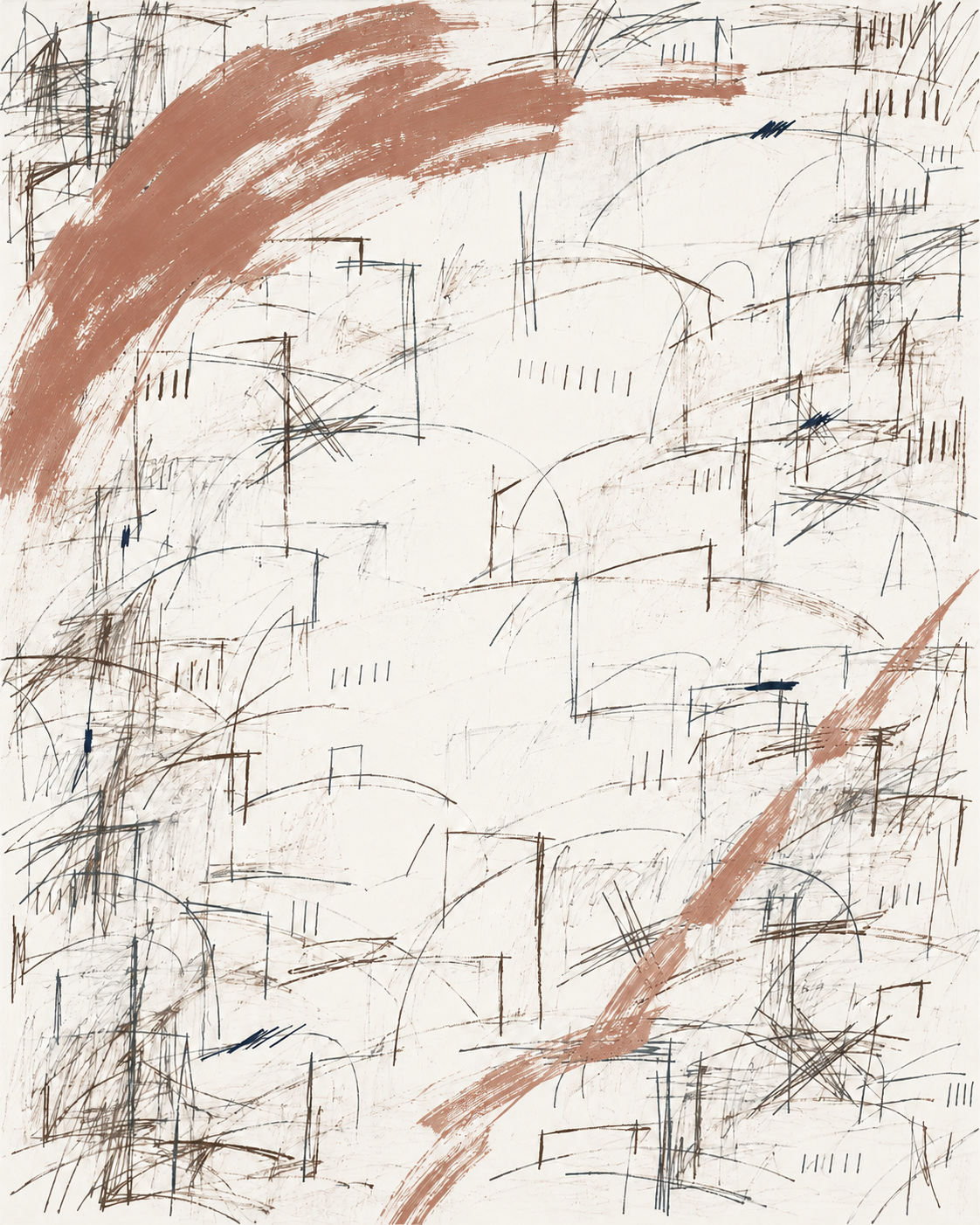
In Finding Our Bearings, fine construction marks and partial architectural frames sit around a broad Clay gesture. Some passages gather detail; open intervals interrupt the field. A strong movement can draw the eye without explaining every small mark. The drawing offers an inquiry into finding direction among signals that remain incomplete.
Give attention a direction
Hierarchy helps establish what deserves attention at a particular moment. A heading can identify the subject of a page. A clear entrance can establish where a visit begins. A service update can bring the next responsibility into view.
Their weight depends on what surrounds them. If several things compete for the same emphasis, the intended starting point may become difficult to recognize. Giving an instruction space, changing its position or reducing competing material can make its role more apparent.
Sequence carries that attention forward. An overview can establish the available routes; a more specific cue can support the decision that follows. Someone should also have a way to pause, return to a recognizable point or understand what happened after an action.
Landmarks offer another kind of continuity. A name, a visual reference or a distinctive feature can help relate the current moment to an earlier one. Its usefulness depends on where it is encountered and what the person already knows.
Follow one visit across its different settings
Consider a furnishings business offering appointments online and welcoming people to a showroom. A visitor chooses a consultation, receives a confirmation and then arrives at the building.
The website might group the appointment options by purpose. The confirmation could carry the selected appointment name, the entrance to use and what to expect on arrival. A recognizable destination name at the showroom can continue that guidance, while the person welcoming the visitor needs access to the relevant booking information.
After the conversation, the follow-up can identify what was agreed and who is expected to act next. Each setting offers different information, with a continuing relationship between the steps.
At Abstraction, we can examine that route with the organization and consider how language, interface, information and spatial cues support it. The useful response might involve clearer naming, another sequence or a better handover between the people maintaining the service.
Keep the bearings useful
Guidance needs attention as services, rooms, content and responsibilities change. Retaining the reason behind a name or a placement helps a team understand what else may need updating when one element moves.
Wayfinding Design develops the practice in greater detail across places, signs and digital guidance. This companion begins with the wider question opened by the artwork: what gives someone enough understanding of the present situation to choose a useful next step?
Return to the Gallery
Encounter Finding Our Bearings in the Gallery