Your organization has a history before we arrive. Some of it is written down. Some lives in the way a colleague explains the work, a customer's question or an idea that keeps returning because it has not yet found the right form.
Those things may sit in different places and seem to concern different decisions. Bring them into conversation and a relationship can appear: something worth expressing, a need worth investigating or a possibility none of the parts suggested on its own.
At Abstraction, we help you find those connections and give them a useful direction. You do not need to turn everything you know into a finished brief before we can begin.
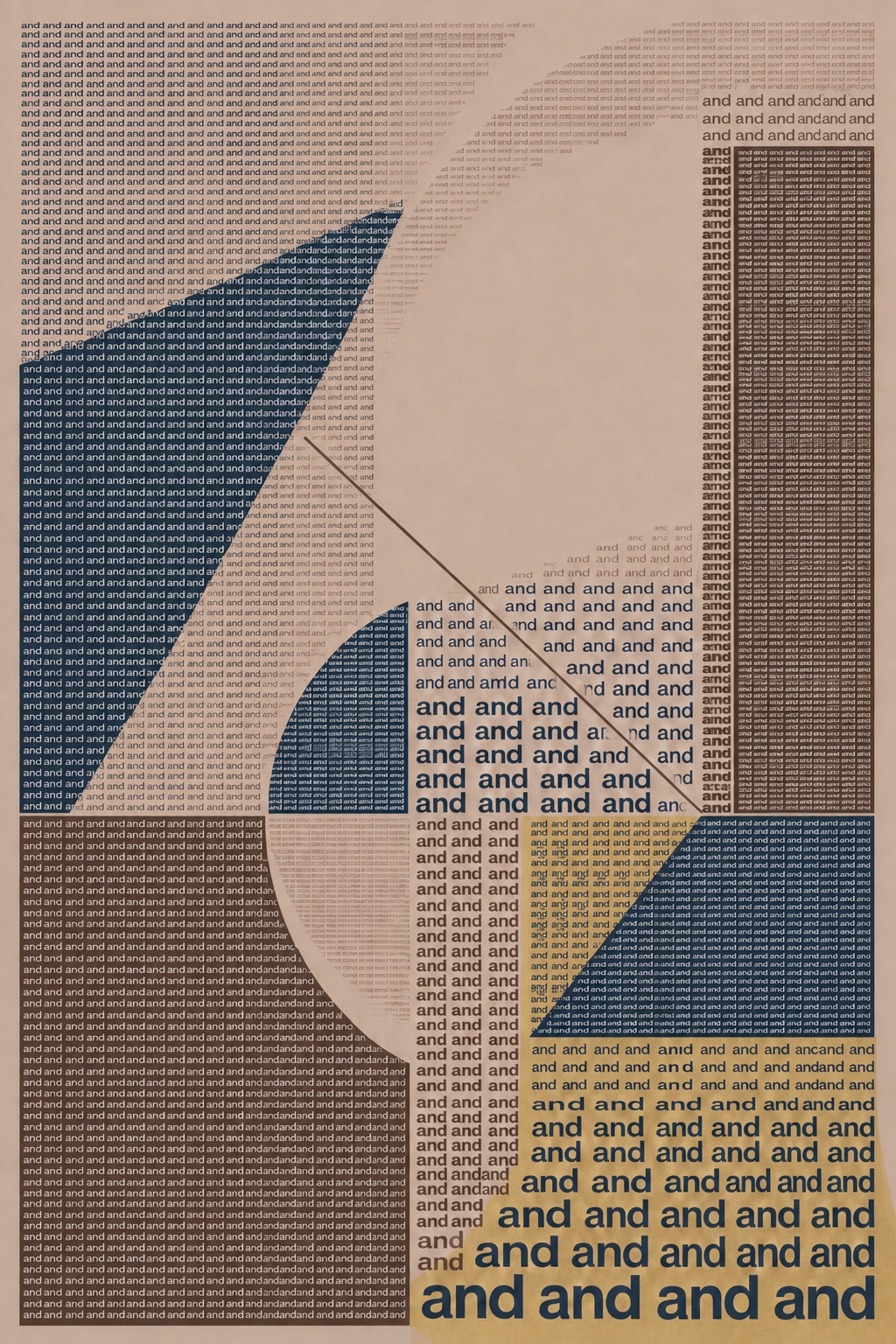
Our Gallery work, And and and, explores memories finding connection within a larger narrative. In our practice, the related question is how what people contribute can become something we understand, create and continue to build on together.
Begin with what people carry
Tell us how you came to do the work this way. What do people come to you for? Which part makes you proud? What have you tried before, and what would you like to make possible next?
A detail that feels ordinary inside the business may be the beginning of a more distinctive explanation. An old decision may reveal a responsibility we need to preserve. Something your team keeps explaining in person may deserve a clearer place in the experience.
We ask questions because the relationship among those contributions is rarely available in a list of deliverables. Your knowledge helps us see what an outside interpretation would miss. Our role is to listen closely, connect what we learn and use our judgment to make the possibilities tangible.
Co-Creation gives that exchange a continuing place. We might explore alternative explanations, work through a sketch or compare different ways an idea could take shape. You can recognize something true to the business, question what feels wrong and discover a possibility you had not considered before.
You should not have to become a designer to participate. The work gives us something specific to think about together.
We also keep the different kinds of knowledge distinguishable. A remembered conversation can tell us where to look more closely; it does not establish what everyone needs. Research, operational experience and ambition each contribute something different. Understanding their roles gives creative judgment more to work with.
What people bring to the conversation should have a chance to change what becomes possible.
Find the thread without flattening the story
A business can have several capabilities, serve different people and hold more than one ambition. Coherence does not require pretending otherwise.
We look for what gives those parts a meaningful relationship. That might be a distinctive way of solving a problem, a commitment people can recognize across your work or a body of knowledge that becomes useful in several settings.
Brand Strategy helps turn that understanding into choices. What should people recognize about the business? What can you credibly offer them? Which ideas belong together, and where would a distinction help someone understand?
The direction should have enough character to feel like you and enough clarity to guide the team. It need not force every offer into the same sentence or ask every page to explain the entire organization.
A coherent whole gives its parts a place. It also allows each to do its own work.
The abstract and Constructivist influences behind Abstraction's founding inform this way of working. In our practice, that means attending to what a different arrangement can reveal. Change the emphasis, bring two ideas together or give a thought enough form to be questioned, and something previously difficult to explain may become possible to understand.
Making is part of that discovery. We do not have to resolve every thought before beginning to shape it. A sentence, sketch or prototype can expose a missing relationship, make a new one tangible or give us a reason to reconsider the direction. Understanding and making develop together.
Let the shared history shape what you make
When we help a maker introduce workshops alongside the objects it creates, we begin by exploring what connects making and teaching for that team.
The owner may talk about the patience behind a particular technique. The people making the objects can show us decisions a finished photograph leaves out. Earlier questions from customers may suggest an interest in the process, while conversations with prospective participants help us understand what they would actually value in learning it.
Together, we explore how those contributions could shape the offer. Is the workshop about completing an object, understanding a material or spending time learning a craft? What should someone know before choosing it? What can the team support well?
Those questions affect the story as well as the practical arrangements. A demonstration might reveal what makes the work distinctive. A sequence of images might give unfamiliar steps a more inviting form. Language drawn from the team's own explanations can carry a character that polished generalities would miss.
We develop material with you and examine what it makes clear. Does it still feel like your practice? Can someone understand the experience being offered? What deserves more explanation, and what is already being expressed through the image or gesture?
Content Strategy helps give those pieces their purposes and relationships. The account of the craft, the description of the workshop and the information needed to attend can support one another without becoming three versions of the same introduction.
Making that content can deepen the direction itself. A phrase may expose a question the team has not resolved. An image may bring forward a strength that had been difficult to name. Giving the idea form lets us discover more about it.
The result should be something your team understands and is proud to stand behind, with a clearer sense of how to carry it forward.
Make room for possibility and a useful commitment
Seeing more connections can reveal more than we can responsibly undertake at once. That is a reason to make choices together, not to stop exploring or turn every idea into a project.
We consider what people would value, what is feasible and what the business can sustain: desirability, feasibility and viability. Budget, time, responsibilities and dependencies help determine the commitment that can do the work well.
For the maker, a focused workshop offering may be the useful beginning. A larger learning library might belong later. An idea that sounds appealing may need more inquiry before it earns a place in either.
We distinguish what matters now, what should follow, what can wait, what remains unresolved and what we decide not to pursue. The reasons matter. A deferred idea deserves more than a name in a forgotten list; the next person should be able to understand what would make it worth revisiting.
Our guide to choosing project priorities explores those decisions more fully. Focus gives the next step a purpose without pretending every worthwhile possibility must fit inside it.
Choosing what comes next does not require forgetting what came before.
Carry the understanding into the next conversation
What we decide becomes part of what we know together. So does the response when the work enters use.
We want to retain more than the finished asset: the question it answered, the reasoning behind a choice, what happened and what remains open. Product Intelligence connects that learning so it can help the next decision rather than remain scattered across conversations and reports.
The record should be useful, not exhaustive. A short explanation may preserve the reason a choice was made without retaining every personal detail behind it. We consider what belongs, who should have access and what needs updating as the understanding changes.
An earlier decision can be revisited without being dismissed as a mistake. A different audience, an improved capability or new evidence may change what is possible. Equally, returning to an idea may confirm that it should remain deferred. History informs the judgment; it does not oblige us to repeat or reverse it.
Never the Same considers why continued attention matters when people and circumstances change. And and and asks what we can carry between those encounters, and how their connections can give the next one more substance.
Our subscription relationship gives this continuity a practical form through shared records, working conversations and agreed improvements. Larger initiatives are scoped separately. We can return to a possibility with its history in view and a clearer basis for deciding what belongs next.
The learning continues through our process:
Discover → Define → Explore → Design / Develop / Market → Learn → Advance → Discover
Each round has a purpose and a commitment we can explain. What we learn becomes part of the next beginning.
Contact Us
Bring us the ideas that keep returning, the parts of your business that are difficult to connect or the question behind what you want to make next. We will help make the complexity visible and shape a useful direction with you.
Return to the Gallery
Encounter And and and in the Gallery