An idea becomes easier to discuss when there is something specific to examine. A sketch, a rough model or a working page can reveal a relationship that remained vague in conversation. Making gives the next question a place to begin.
The first version needs enough definition to produce a useful response. Its purpose might be to test an arrangement, an interaction or the sequence of an explanation. Knowing that purpose helps us decide which detail matters now and which can wait.
Give one question a tangible form
Consider an equipment-hire team trying to improve the first enquiry on its website. The initial request might be for a shorter form. Before committing to a new interface, we could make a rough version of one enquiry and work through it with staff and prospective customers.
Someone may know the job they need to do but be unsure which item to request. A colleague may need dates and location before suggesting suitable equipment. Another may point out that collection and delivery ask for different information. These contributions can alter the question the first version needs to answer.
A simple page, a few sample records and the next response can make that difference discussable. We can ask where guidance belongs, which information is needed now and what can be learned in conversation later. The prototype needs enough substance to expose those relationships.
We then keep the observation close to the change it informs. If an alternative is set aside, the reason remains available. A later version may make it useful again, or show that a different difficulty deserves attention. The record of making becomes part of the team's shared understanding.
Keep what the version teaches
At Abstraction, we can use these early forms to compare what we expected with what we encounter. Where does a reader hesitate? Which connection seems natural? What becomes difficult when another requirement enters? A response becomes more useful when we can connect it to a particular decision in the work.
Revision then carries the learning forward. We retain the reasoning behind a change, including an alternative we may need to revisit. Several versions can remain useful because they expose different possibilities or make a tradeoff visible.
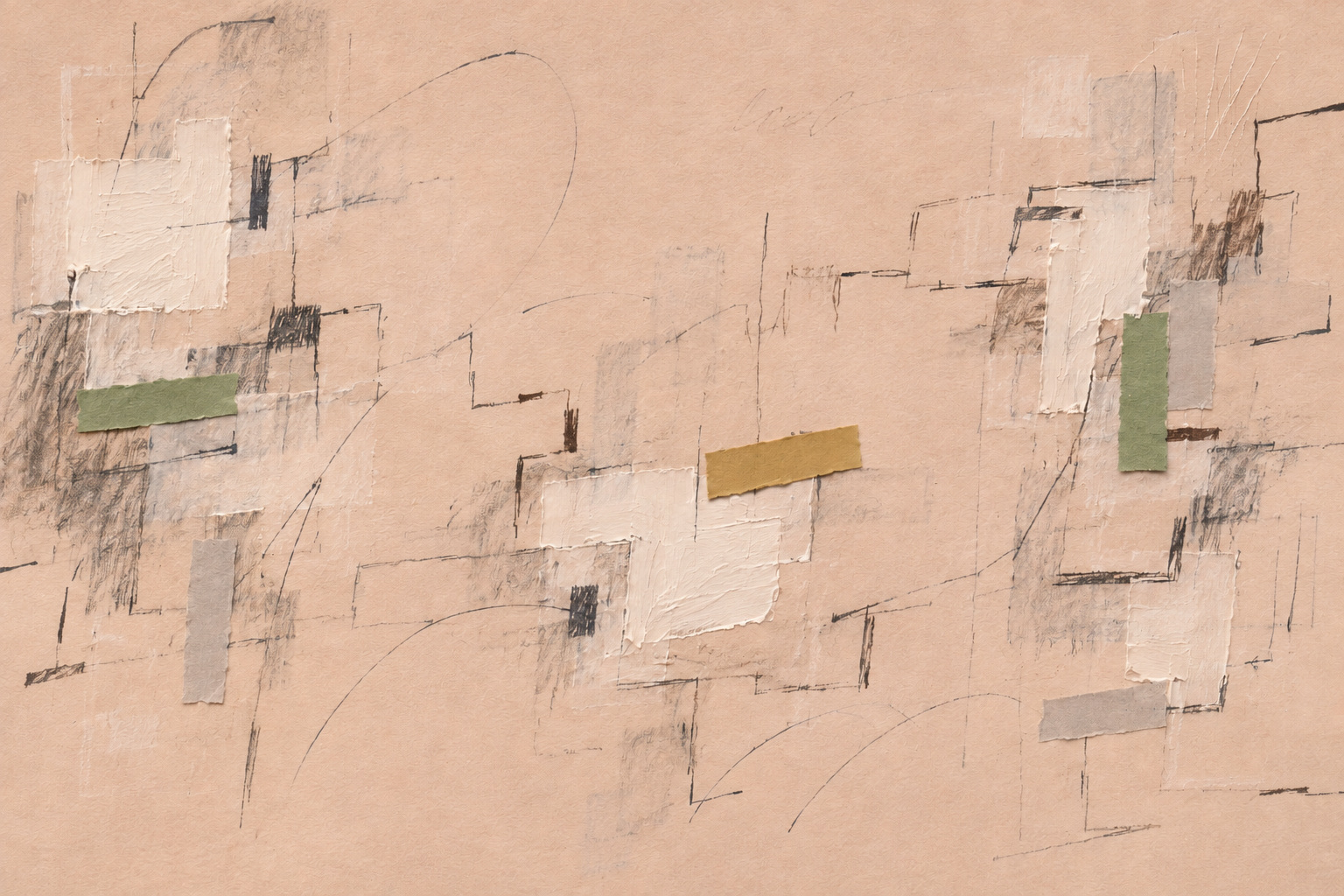
Finding Through Making gives this process a visual expression. The pauses, erasures and small interventions leave room for discovery. Progress can include changing the question, preserving an unresolved area or finding that a promising idea needs another form.
Return to the Gallery
Encounter Finding Through Making in the Gallery