The visible part of an experience often depends on less visible support. A clear page needs maintained content. A useful service needs someone to respond when circumstances change. A physical arrangement depends on the details that connect it to its surroundings.
We can examine support by following a particular action. What allows someone to begin, continue and recover when something goes wrong? That question can reveal responsibilities, information and small connections that deserve as much consideration as the main interface or object.
Follow the support behind one update
Consider a course provider changing the venue for an upcoming session. A clear announcement on the website is one part of the response. The person attending may also rely on a confirmation email, a calendar entry, arrival information and a member of staff answering questions.
We can follow that change with the team. Where is the authoritative venue information kept? Which materials draw from it, and which require a separate update? Who can recognize when the work is complete? Those questions make the supporting relationships visible before a polished announcement conceals an unfinished handover.
The design might give one record a clearer home, make a responsibility explicit or help a colleague identify the people affected. A small interface cue could show that a change still needs review. A short explanation could let the next person understand why an update matters. The appropriate response depends on the actual setting and the team's way of working.
We can examine the ordinary path and a difficult case together. What happens if a colleague is away or the venue changes again? Clients contribute knowledge about those circumstances; our role is to make the dependencies understandable enough to design and discuss.
Give supporting details a place in the proposal
The size of a supporting part tells us little about its consequence. A short instruction may prevent a difficult misunderstanding. A reliable handover may determine whether a new system remains useful. A carefully resolved junction may allow a larger spatial idea to work as intended.
At Abstraction, we consider these relationships while the main proposal is developing. We can identify who will maintain the result, which decisions need to be documented and where further attention will be required. These details become part of how the work is made usable over time.
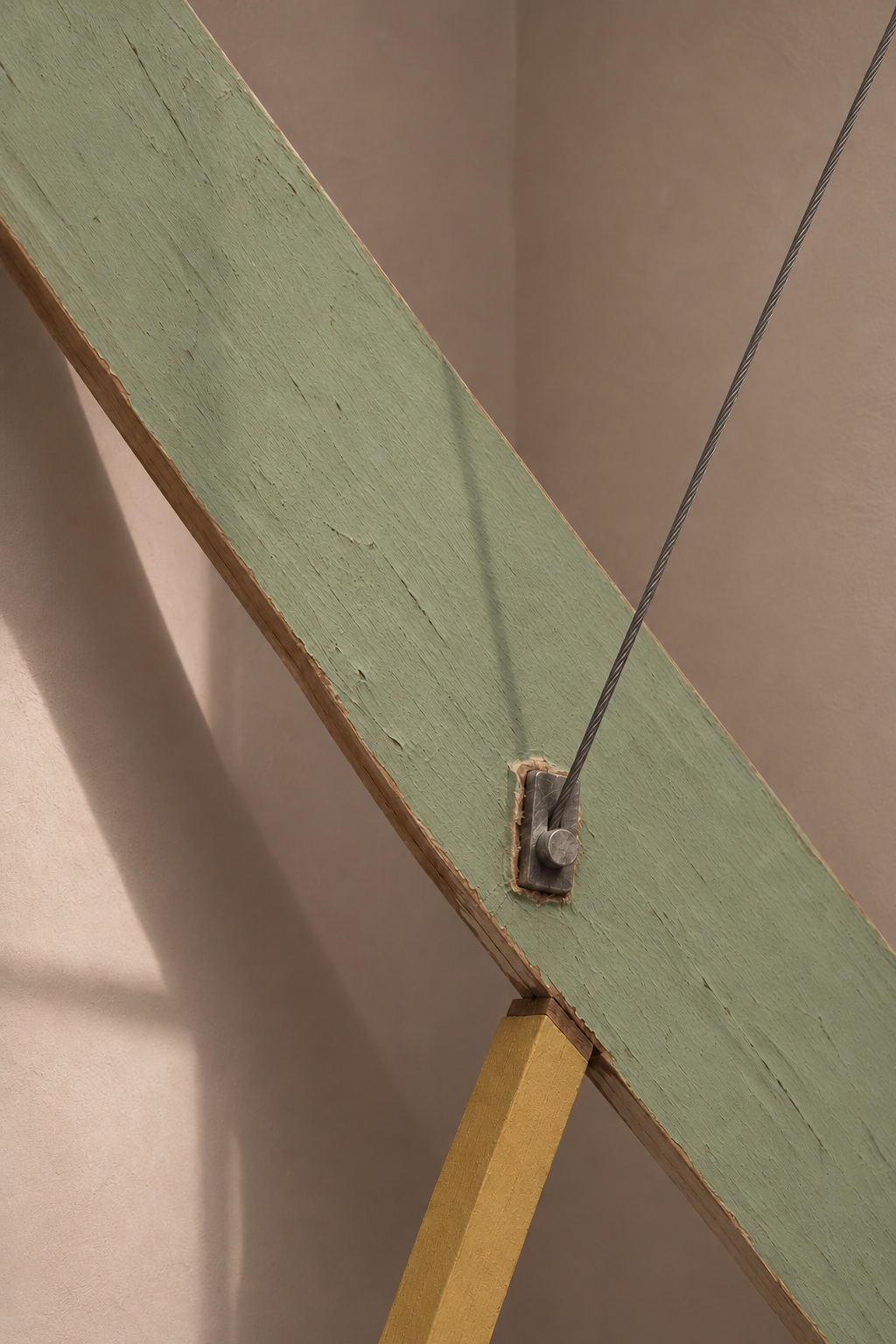
What Is Needed keeps its broad surface partly outside the frame and makes a small fastening visible. It offers a way to consider the care carried by a supporting relationship, including the ones we notice only when they are missing or under strain.
Return to the Gallery
Encounter What Is Needed in the Gallery