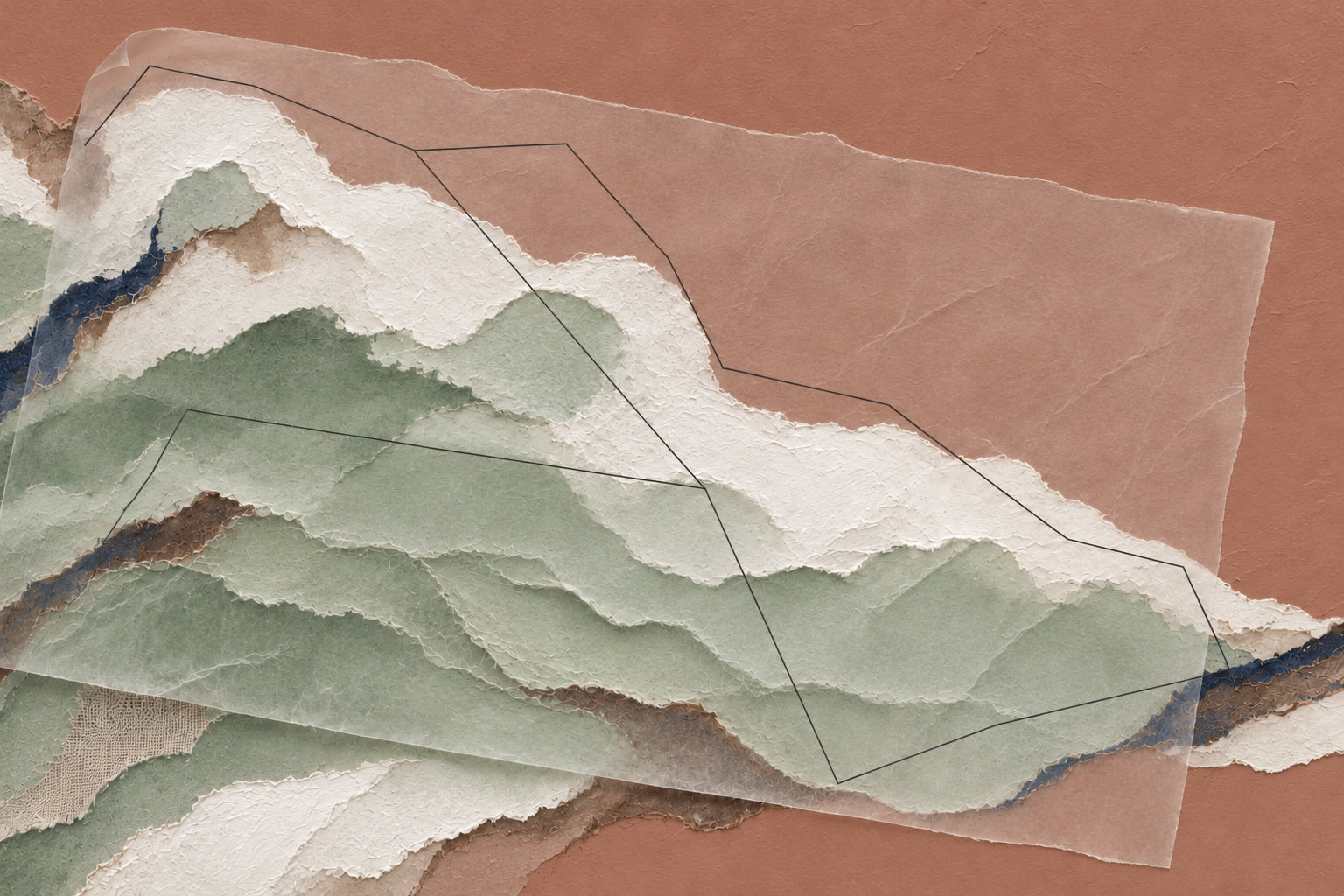
A persona gives a team a shared account of the people it is designing for. A journey map connects encounters that may otherwise be considered separately. A strategy brings choices and priorities into a form people can act on.
These representations help because they select and organize. They make some relationships easier to discuss while leaving other details outside the picture.
The responsibility is to understand what the representation is for, what it preserves, and where the actual situation needs to correct it.
A useful account begins with a purpose
Before choosing the form of a model, we ask what decision it should help.
A persona intended to guide content needs to illuminate what people want to understand, the knowledge they bring, and the circumstances around the decision. A persona intended to guide an interaction may need a closer account of tasks, access needs, interruptions, or support.
Adding details that do not help the work can make the document feel more complete without making the decision clearer. Removing a relevant distinction can make it easier to read while making it less useful.
At Abstraction, we shape the account around the questions the work needs to answer.
Preserve the relationships that matter
Alfred Korzybski's map-and-territory distinction includes a positive account of usefulness: a representation can help when it retains relevant structural relationships. Institute of General Semantics, quoting Science and Sanity.
For a customer journey, that might mean preserving the connection between a promise in a campaign, the information available on a website, and the service that follows. The map can make a gap visible even when no single team owns the whole experience.
For a persona, it might mean showing how familiarity with a product changes the help someone needs. For a strategy, it might mean connecting an ambition with the choices, resources, and conditions required to pursue it.
The representation earns its place through what it makes understandable.
A useful model helps us return to reality with better questions.
Make the basis of the account visible
A team's assumptions, direct participant evidence, and a designer's interpretation can all appear in one working document. They should not become indistinguishable.
We can show which observations support a pattern, where accounts differ, and what still needs investigation. The aim is to make the next decision more responsible and the next conversation more useful.
An assumption-based persona can help frame research. It becomes misleading if its invented details are later treated as facts about customers. A journey map can organize known encounters while leaving an uncertain transition visible.
A gap in understanding is worth preserving as a question.
Let a person change the picture
A persona can prepare us to listen; the person still needs room to surprise us.
Someone described as experienced may need detailed help with an unfamiliar part of a service. A returning customer may have different circumstances from their previous visit. A preference expressed during research may change when an idea becomes tangible.
We explore what those differences mean for the work. Some suggest a broader pattern. Others reveal a situation worth accommodating without making it the new universal customer.
The same applies to a strategy. An assumption that once served the direction may need revision when the market, organization, or evidence changes. Keeping a record of its reasoning helps us understand what should be reconsidered.
Use the model across the decisions it should inform
Shared understanding becomes valuable when it reaches content, marketing, design, development, and service.
We can use a journey map to examine whether an explanation arrives when it is needed. A persona can help evaluate the clarity of an invitation. A strategy can help choose between worthwhile initiatives while keeping the deferred possibilities available.
Those decisions generate further experience. What people do, ask, and encounter can improve the account guiding the next stage.
What Comes Forward examines how attention shapes what enters our understanding. Held Open considers how to work while part of that understanding remains unresolved.
Bring the picture you are working from
You may have personas, a strategy, a map of the experience, or knowledge held across several people. We can help make it useful together: clarify its purpose, examine its basis, and connect it with decisions that improve what people encounter.
The Gallery companion keeps a selective drawing and the richer material it describes in view at once. The practical commitment is to keep the work answerable to the people and circumstances beyond the outline.
Return to the Gallery
Encounter Beyond the Outline in the Gallery