About the work
We speak of returning to nature as though we had managed to leave it.
We might mean leaving the city, finding somewhere quieter, spending time where less has been arranged around us. But the person who arrives is not separate from the place. We bring our bodies, our attention and the things we have learned to notice. We are there, too.
What changes if we begin with that belonging?
Making from within
Making can feel like an act of separation. A line divides a surface. A wall establishes an inside. A name lets one thing stand apart from another. Through these choices, we give the world forms we can recognize and inhabit.
Yet a boundary does not make either side independent. A wall changes the space around it as well as the space it encloses. An opening matters because of what it allows between them. What we make enters relationships we can influence without entirely controlling.
Intention is present, but it is not alone.
In making, something may answer differently than expected. A material resists. A proportion feels wrong. Something we had treated as incidental becomes the reason to change direction. We can insist on the original plan, or let the encounter teach us something about what we are making.
That response need not diminish authorship. It may be where authorship becomes attentive.
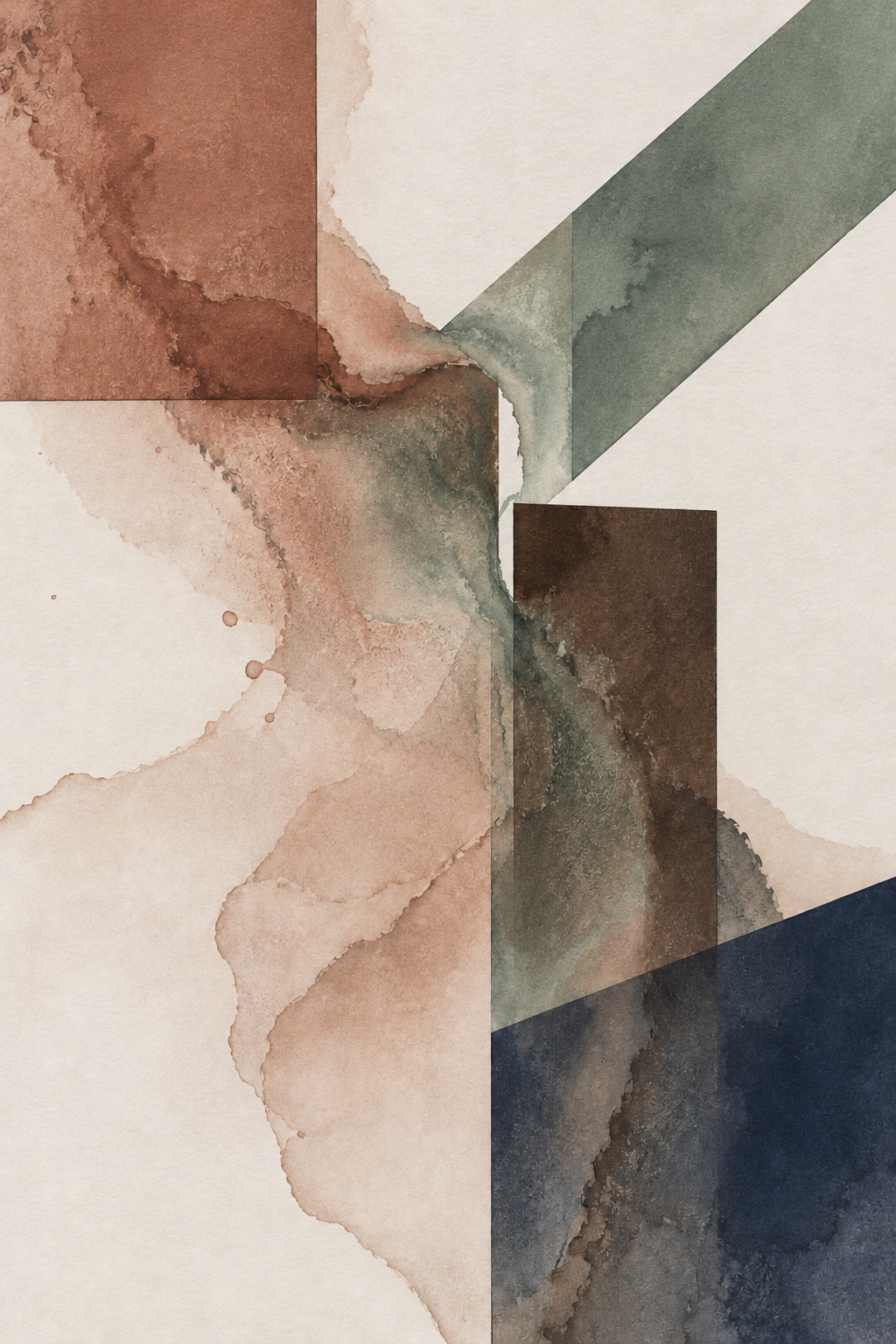
In this image, a precise edge and an unsettled passage occupy the same field. One gives the eye a direction; the other makes that direction less certain. Their meeting can be read as an interruption, an accommodation or the beginning of another form. No single reading has to settle the relationship.
Perhaps the distinction between the deliberate and the unplanned is useful without being a division between us and nature. A decision can be ours while its consequences extend beyond what we intended. Something can bear the mark of our making without becoming ours to determine completely.
This leaves a difficult question within the beauty of making. Belonging does not mean that everything we do is caring, or that every change should be welcomed. We can be part of something and still damage it. Recognizing the relationship may make that harder to dismiss.
It also leaves room for another kind of possibility. A path can invite us to linger. An arrangement can bring something overlooked into view. What we make can change the quality of our attention, and that attention can change what we choose to make next.
We do not stand outside the world we shape.
The question is not only where nature ends. It is what becomes possible when we stop imagining that we begin somewhere else.
Where the idea began
This work began with Avery Potter's proposition: “You are nature.” The thought opened a question about human making: if we belong to the world we alter, why do we so often describe our creations as a departure from it?
The composition brings Abstraction's abstract and Constructivist foundations into that inquiry. Deliberate arrangement and expressive irregularity meet without being assigned separate worlds. Their relationship remains available to interpretation.
The work does not ask us to abandon intention. It asks what intention might become when it begins with belonging.
Related work: Never the Same.
Continue in the Index
Explore Making within the world we shape