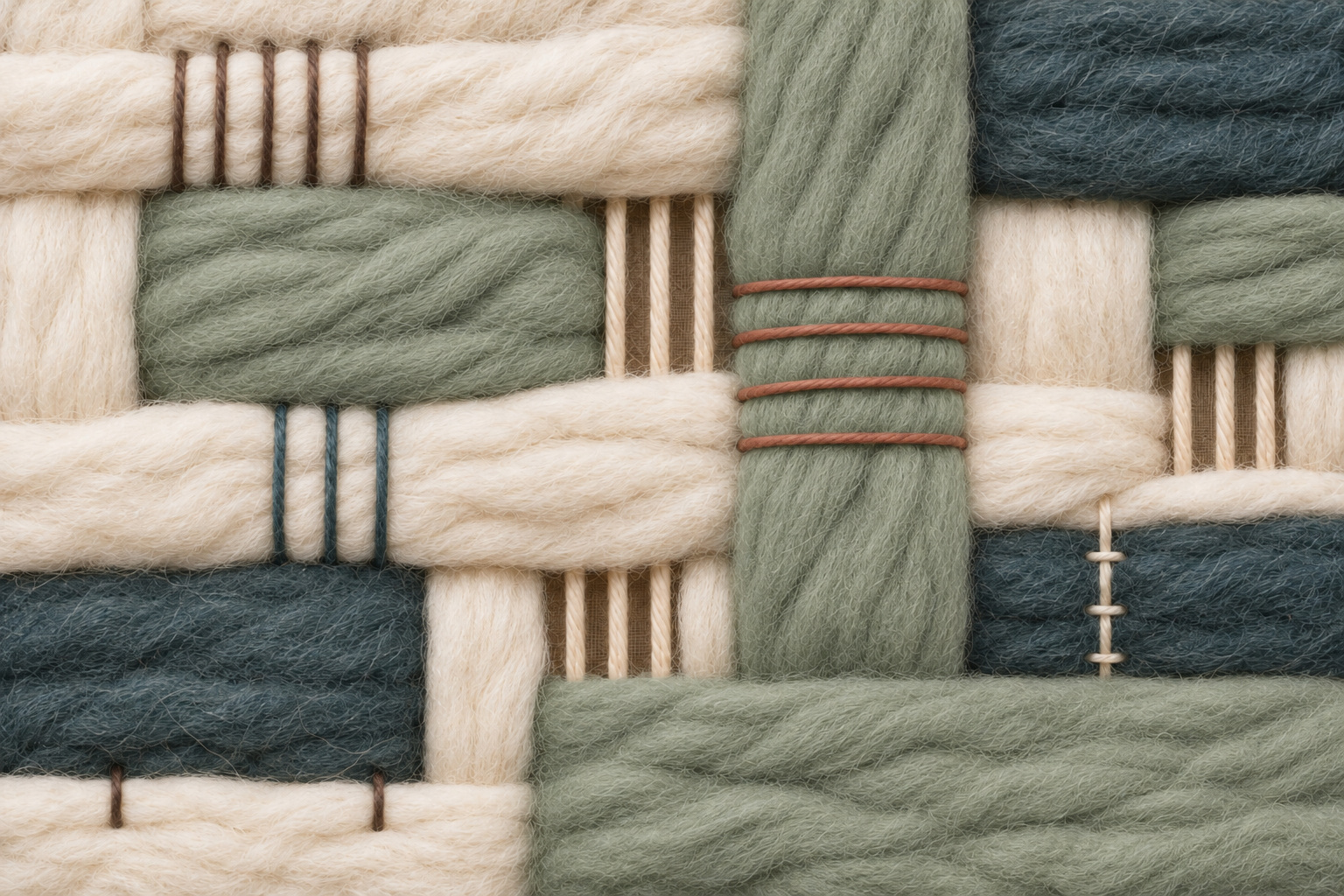
About the work
Thick bundles pass over and under a taut warp. Sage, Gesso and deep Space Night keep their different weights. Small Clay loops secure a meeting within the larger weave; openings let us see some of what supports the surface.
The broad structure draws us toward smaller acts of connection. A crossing, an attachment or an interval changes what we can see of how the parts are held together. The scale of a connection alone tells us little about how much depends on it.
Three companions carry that question into other arrangements. At the Edge attends to the attachment securing a larger field. Joined Strips brings separate contributions into a shared surface. Carried Forward considers what traces of earlier use can bring to another purpose.
Across the four works, differences remain part of what holds the arrangement together. A contribution has a character of its own and a relationship to what surrounds it. Looking closely lets us move between those two scales: the particular part and the structure it helps to make.
We see a connection with Abstraction’s work in that attention to the join: helping people, ideas and existing capabilities enter a useful relationship. Something valuable can be carried forward because its connection to other contributions has been considered.
The visible stitches, openings and traces of wear also leave room to think about continued attention. What supports a relationship may need to be noticed again as its circumstances change.
What gives a connection the capacity to carry something forward?
About the making
The four works were developed through AI-assisted image generation. Fibers, cloth, seams and wear are digital interpretations. Each composition uses Abstraction’s palette to develop a different relationship between its parts, informed by the research credited below.
Research references
- At the Edge: Away Riqcharicheq Weavers Association, Chinchero; research into edge protection and attachment through Centro de Textiles Tradicionales del Cusco.
- Joined Strips: Asante and Ewe Kente strip construction; Victoria and Albert Museum and Ghana Tourism Authority’s account of Bonwire.
- Carried Forward: Mary Lee Bendolph, Work-clothes quilt, 2002, denim and cotton, New Orleans Museum of Art; museum purchase and gift of the Souls Grown Deep Foundation.
Abstraction Creative, 2026 AI-assisted digital material study
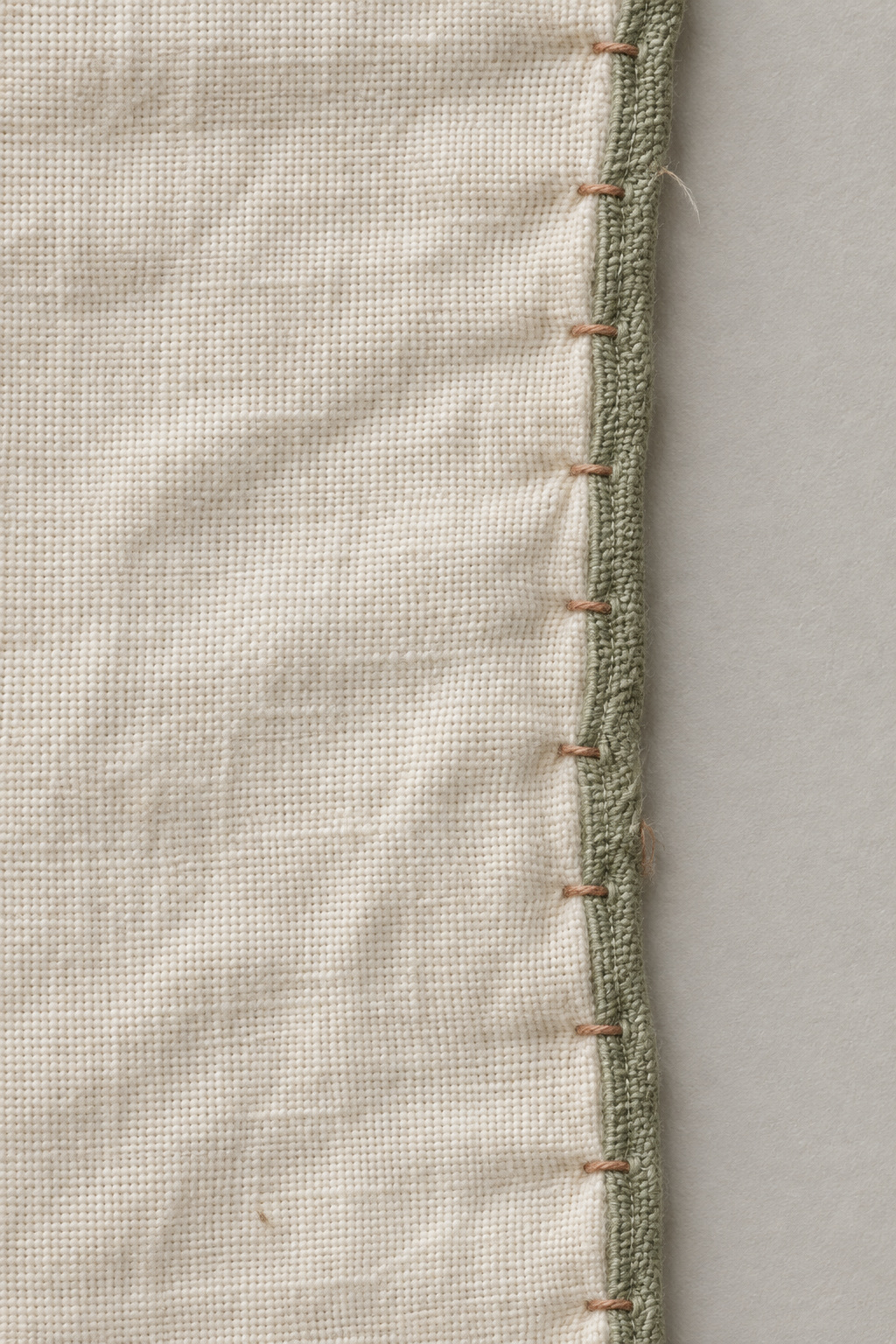
At the Edge
A broad field of fine Gesso cloth approaches a narrow Sage binding. Small Clay stitches repeat along their meeting, drawing attention to how the cloth and binding are held together.
The cloth has weight and a grain of its own. The binding gives its edge another density. Their attachment becomes the subject: a fine connection working at the boundary of something much larger.
That attention to the join connects with Abstraction’s interest in what helps a relationship become capable of supporting further work.
CTTC’s account of Chinchero’s Away Riqcharicheq Weavers Association informed the inquiry into edge protection through ñawi awapa. This digitally generated work interprets that function through an imagined binding and stitches; it does not reproduce the technique’s construction.
Abstraction Creative, 2026 AI-assisted digital textile study
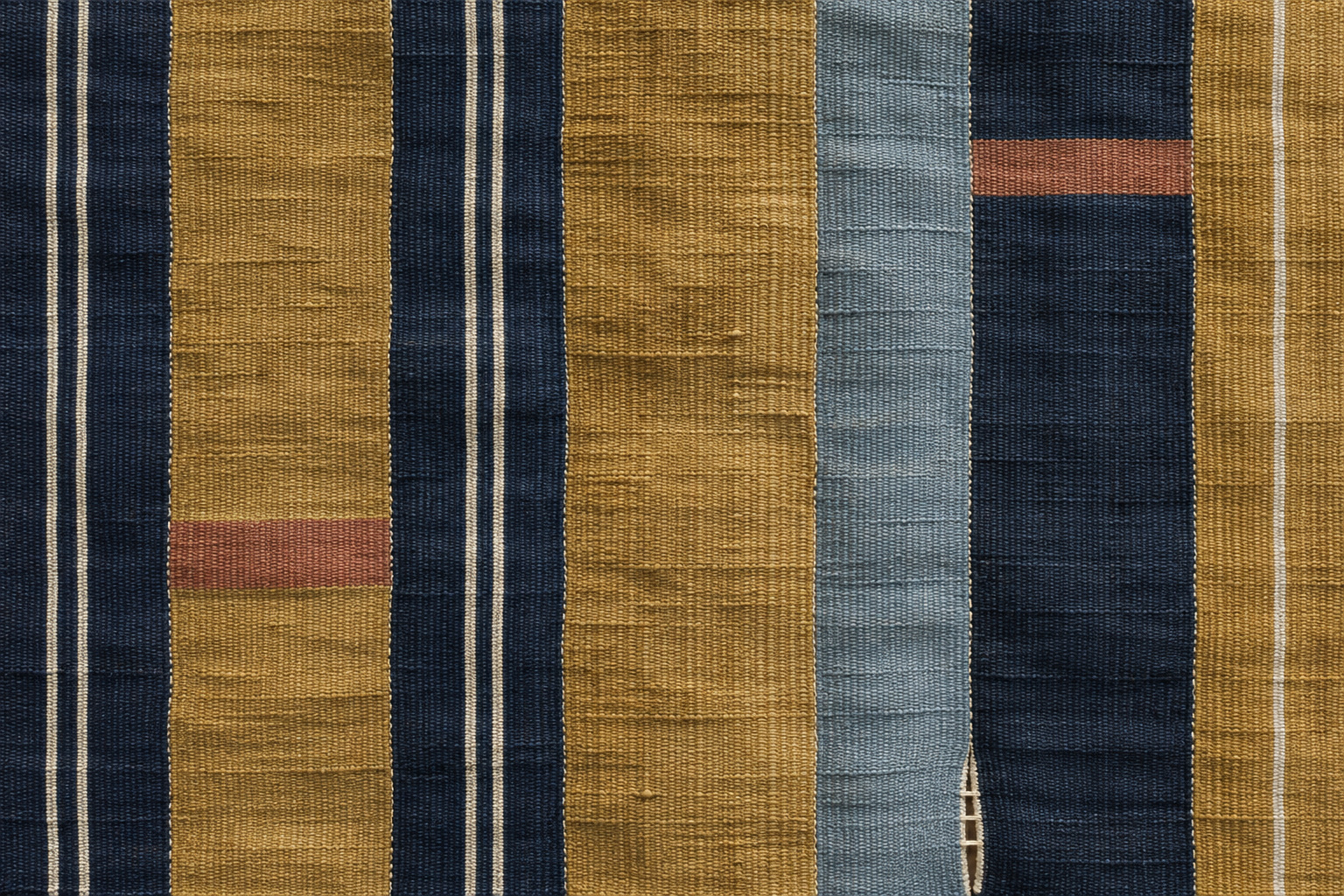
Joined Strips
Narrow woven lengths meet along their edges. Deep Navy, substantial Ochre and a quieter Haze Blue retain their own rhythms. Short Clay bands fall at different heights; fine Gesso stitches join the lengths into a wider field.
A small opening near one seam lets us see the work of joining. We can follow a contribution down the cloth or move across the surface it helps to make.
For Abstraction, the join suggests work that connects distinct capabilities while allowing their differences to contribute.
Research into Asante and Ewe Kente strip construction informed this original digital arrangement. Sources are the Victoria and Albert Museum and Ghana Tourism Authority’s account of Bonwire, an Asante weaving context. AC’s palette, rhythms and generated seam effects develop a separate composition, without reproducing a named Kente pattern.
Abstraction Creative, 2026 AI-assisted digital quilt study
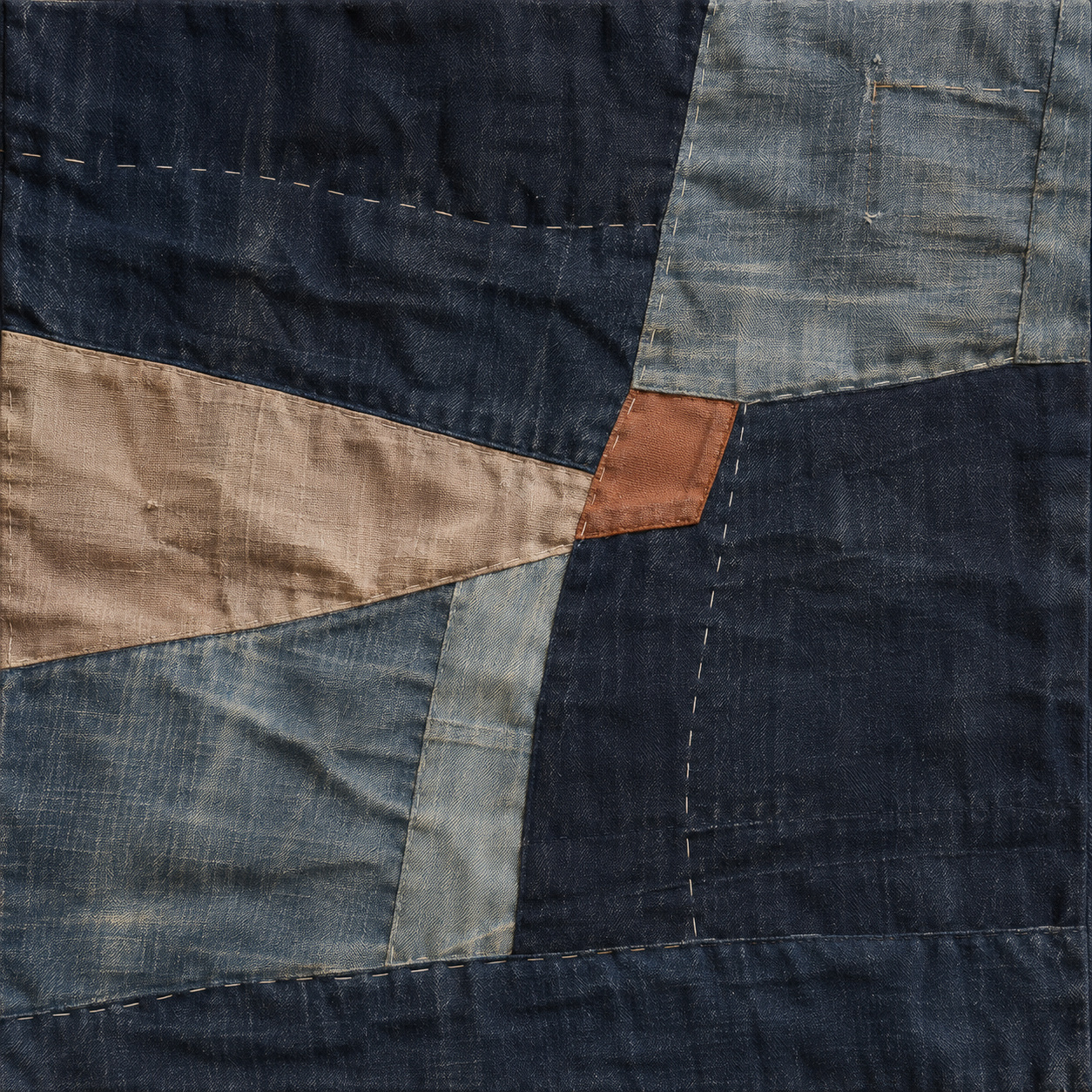
Carried Forward
Unequal cloth pieces meet along offset seams. Deep Navy carries much of the surface; Haze Blue appears where the cloth seems faded. A Dust passage turns the arrangement, and a small Clay insertion sits at an offset seam.
Apparent wear changes at the boundaries. A trace of earlier stitching stays within one piece as fine new seams hold it in another relationship.
The join offers a connection with Abstraction’s work: carrying existing knowledge and capability into a new purpose while keeping their contribution perceptible.
Mary Lee Bendolph’s Work-clothes quilt (2002) prompted attention to material carrying earlier use forward. The source work is denim and cotton, New Orleans Museum of Art, acquired through museum purchase and a gift from the Souls Grown Deep Foundation. AC’s composition, wear and stitching are generated appearances, rather than records of reused garments.
Continue in the Index
Explore Maintaining What Connects Us